
Home / Portfolio / Case Studies / RDHRS Case Study
RDHRS Disaster Patient Movement Platform Case Study
A more effective way to respond when it matters most
The Idea
In the middle of a disaster, every second matters. In the face of a major surge of patients, hospitals may be forced to make rapid decisions about how to best manage their care capacity and capabilities, often with limited visibility into what other patient care resources are affected or available across the region.
Hospitals do try to balance patient loads across facilities, but traditional patient transfer methods rely on one-to-one communication between facilities. That approach quickly breaks down during large-scale emergencies, when dozens or even hundreds of patients may need to be relocated to limit overload at any one site. Delays in identifying available beds and/or mismatched patient placements can directly impact patient outcomes.
While hospitals across the US use electronic health record systems to track and document care for their patients, those systems are generally not interoperable across neighboring facilities, making it difficult to share essential information quickly or consistently.
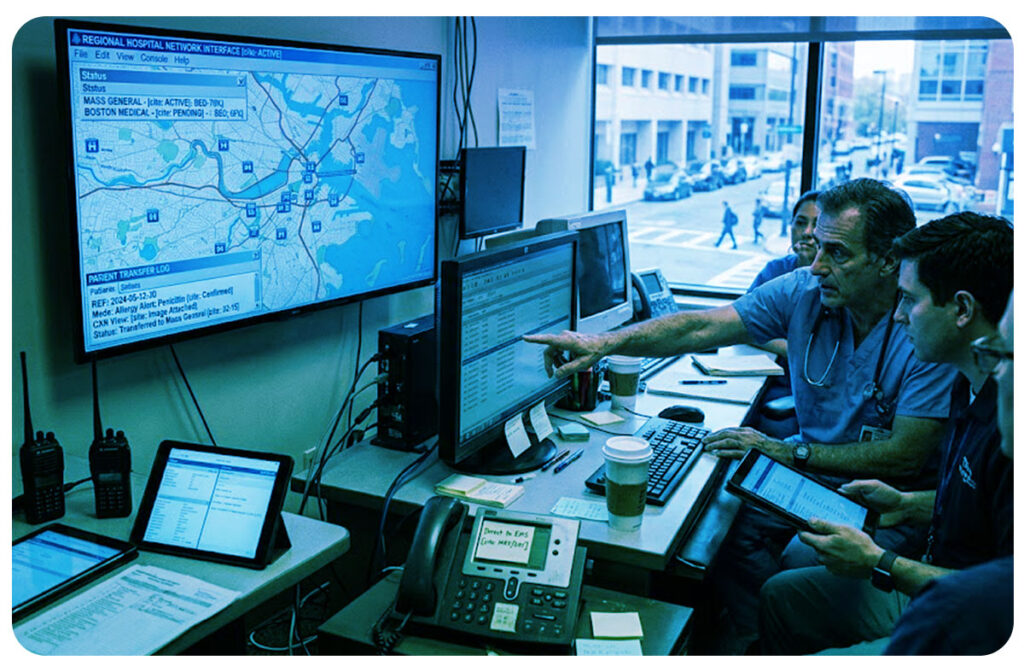
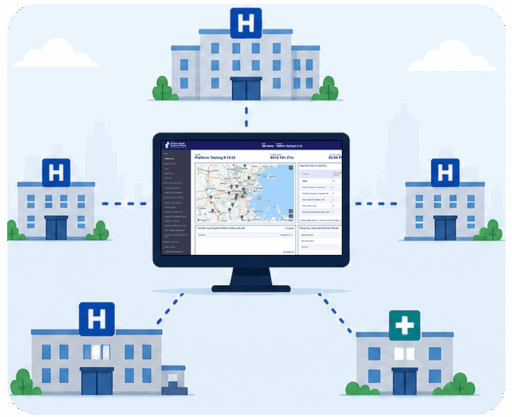
To provide a solution to these problems, the Region 1 Regional Disaster Health Response System (RDHRS), a program funded by the US Administration for Strategic Preparedness and Response (ASPR), has been working to develop a patient movement platform to support improving resource utilization and patient care during disasters.
The goal was to create a centralized platform that could bring clarity to a chaotic process. The system needed to work across all kinds of facilities, to activate quickly in an emergency, and to be able to give clinical teams the essential medical information they need to make fast, informed decisions.
RDHRS Platform Key Features
Highly Secure
Securely share patient information only with teams who “need to know” it to support quality care.
Hospital Capabilities
Patients are matched to receiving facilities with appropriate beds and clinical care capabilities.
Matching Teams
Clinicians view and assign patients to receiving facilities with the appropriate clinical care capabilities, distributing patients in a manner that avoids overwhelming any single facility.
Situational Awareness
Easily track patients through their journey from the transferring facility to the receiving facility.
The Process
Zco partnered with the Region 1 RDHRS to support the design and development of a disaster patient movement platform that centralizes patient placement, bed availability, transport coordination, and real-time situational awareness.
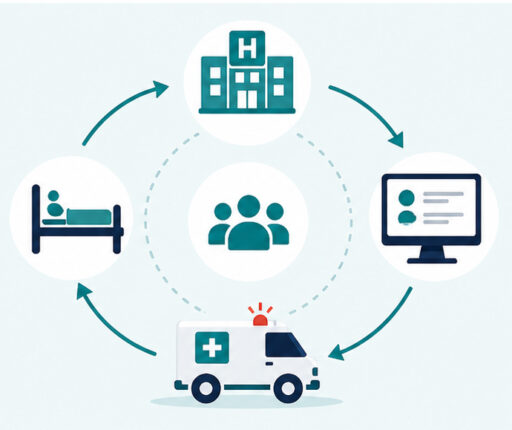
The system begins with transferring hospitals, where patient information is entered into the platform. Each patient is categorized based on their medical care needs, also considering important clinical details such as required medical care equipment, specialty services, and isolation precautions.
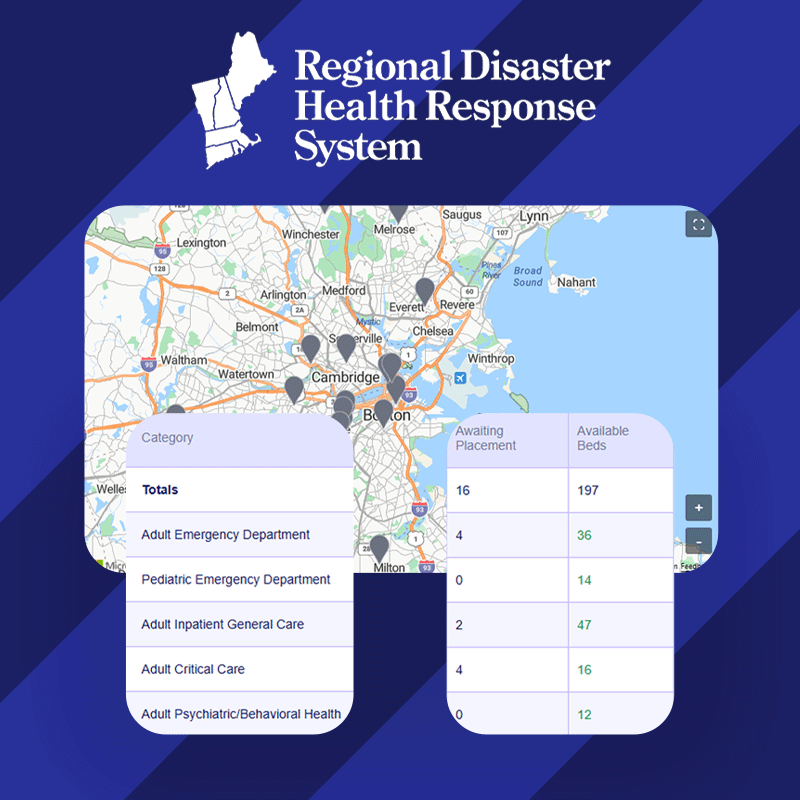
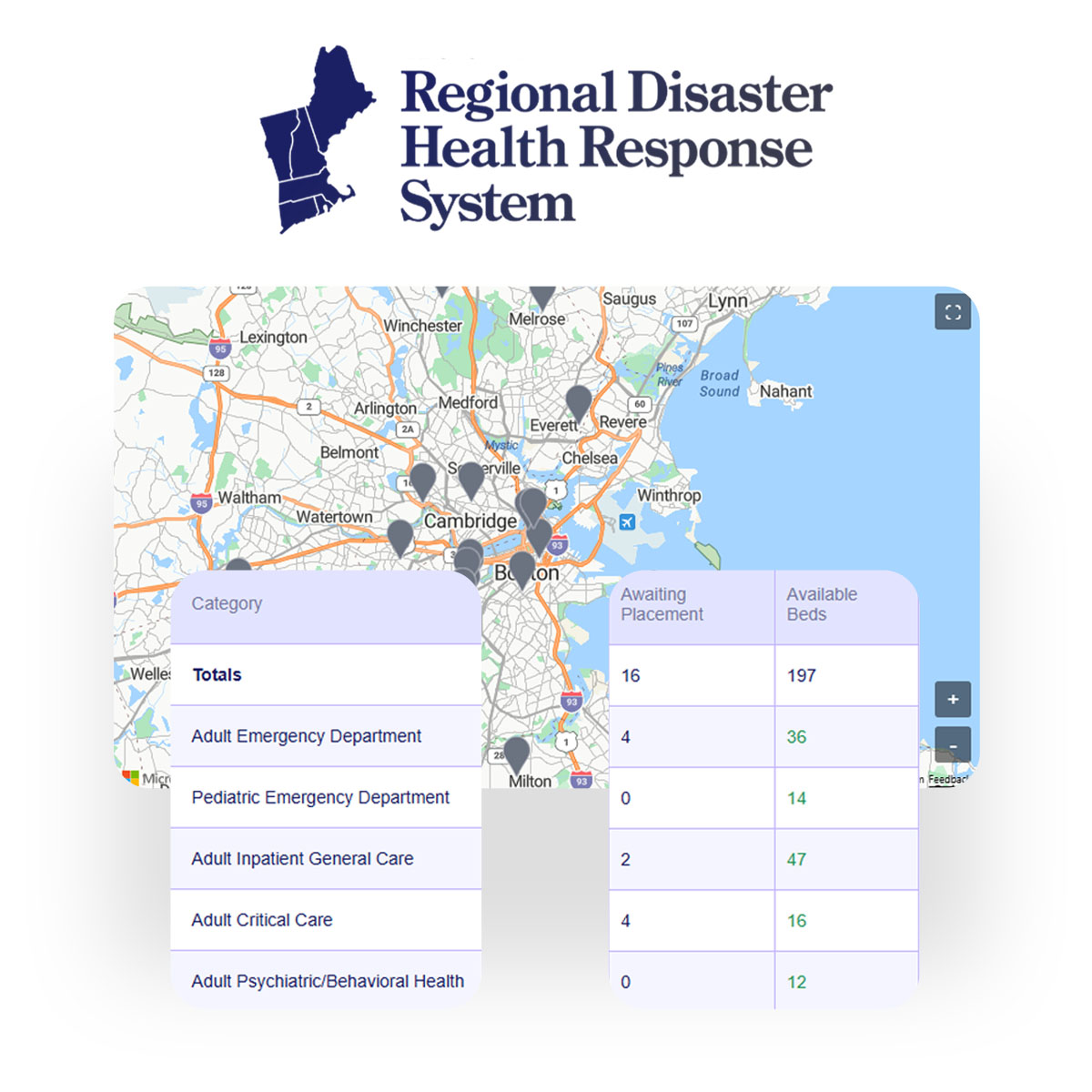
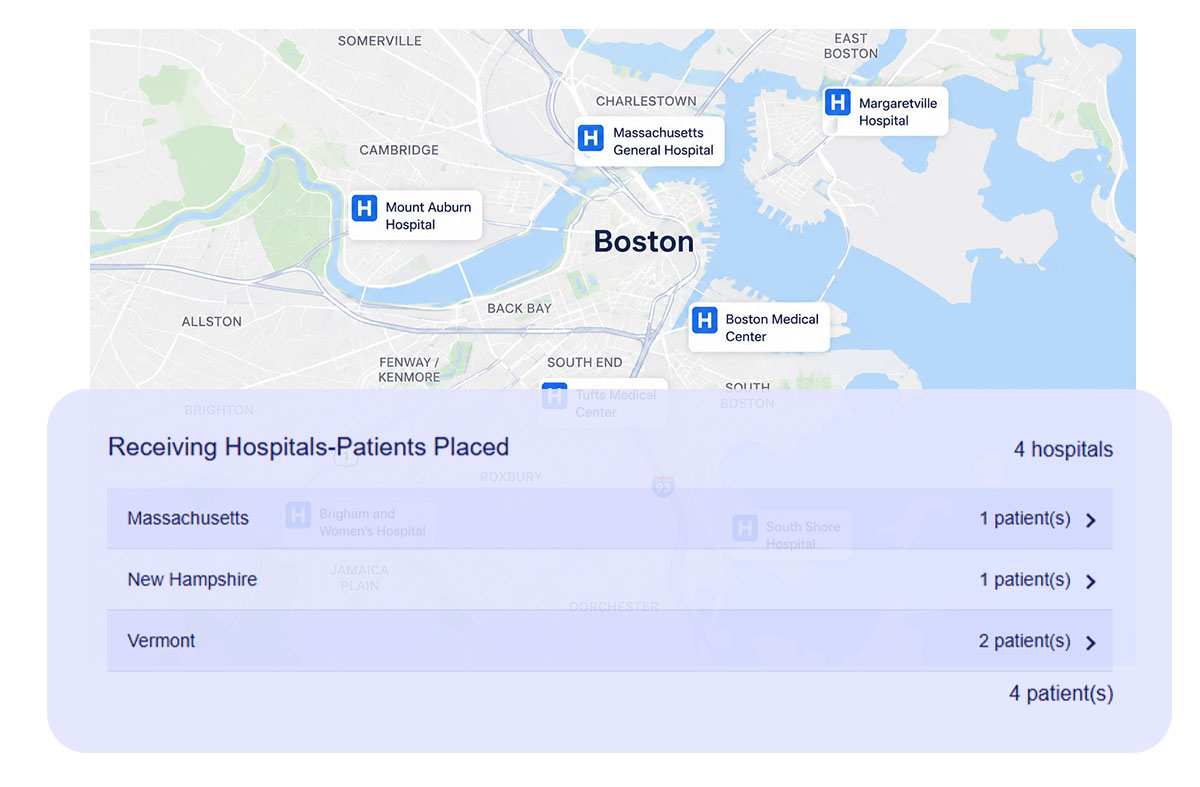
Receiving hospitals have pre-entered their specialty care capability information so it is documented across the community. When an emergency occurs, they can then report their real-time bed availability to create an accurate and current view of system capacity across the region.
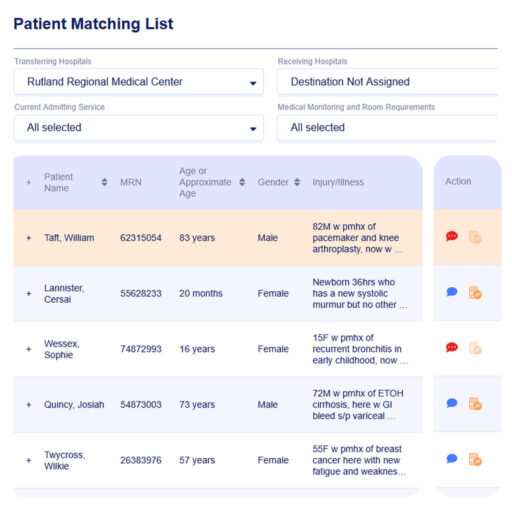
Patient names are fictitious and for demo purposes only.
A centralized and medically expert patient Matching Team brings these two data sets of patient needs and available beds together. Using filters and detailed patient profiles, clinical experts can quickly identify the most appropriate placement for each patient, efficiently using the available resources across the community. The platform allows them to sort, prioritize, and assign patients with confidence, while maintaining visibility into the broader situation.
Once a match is made, transport teams take over. They coordinate logistics, assign transportation, and track each patient’s journey from departure to arrival. Status updates are documented in real time, ensuring that all teams remain aligned throughout the process.
To support accurate and informed decision-making at every level, the platform includes dashboards that provide a clear picture of patient volume, hospital capacity, and potential gaps in resources.
The result is a system that replaces fragmented communication with a single, coordinated workflow.
Quote here, if possible.
The Results
The Patient Movement Platform gives healthcare systems a more effective way to respond when it matters most.
During a disaster, a hospital is able to transfer large numbers of patients faster and with greater ability to safely and accurately consider patients’ medical needs, reducing delays and improving access to appropriate care. Clinical teams no longer need to rely on manual coordination with incompletely available information, which helps minimize risk during high-pressure situations.
With a shared, real-time view of both patient needs and available resources, medical decision-makers can act with greater confidence. This leads to better distribution of patients across stressed facilities and more efficient use of limited capacity and specialty care capabilities.
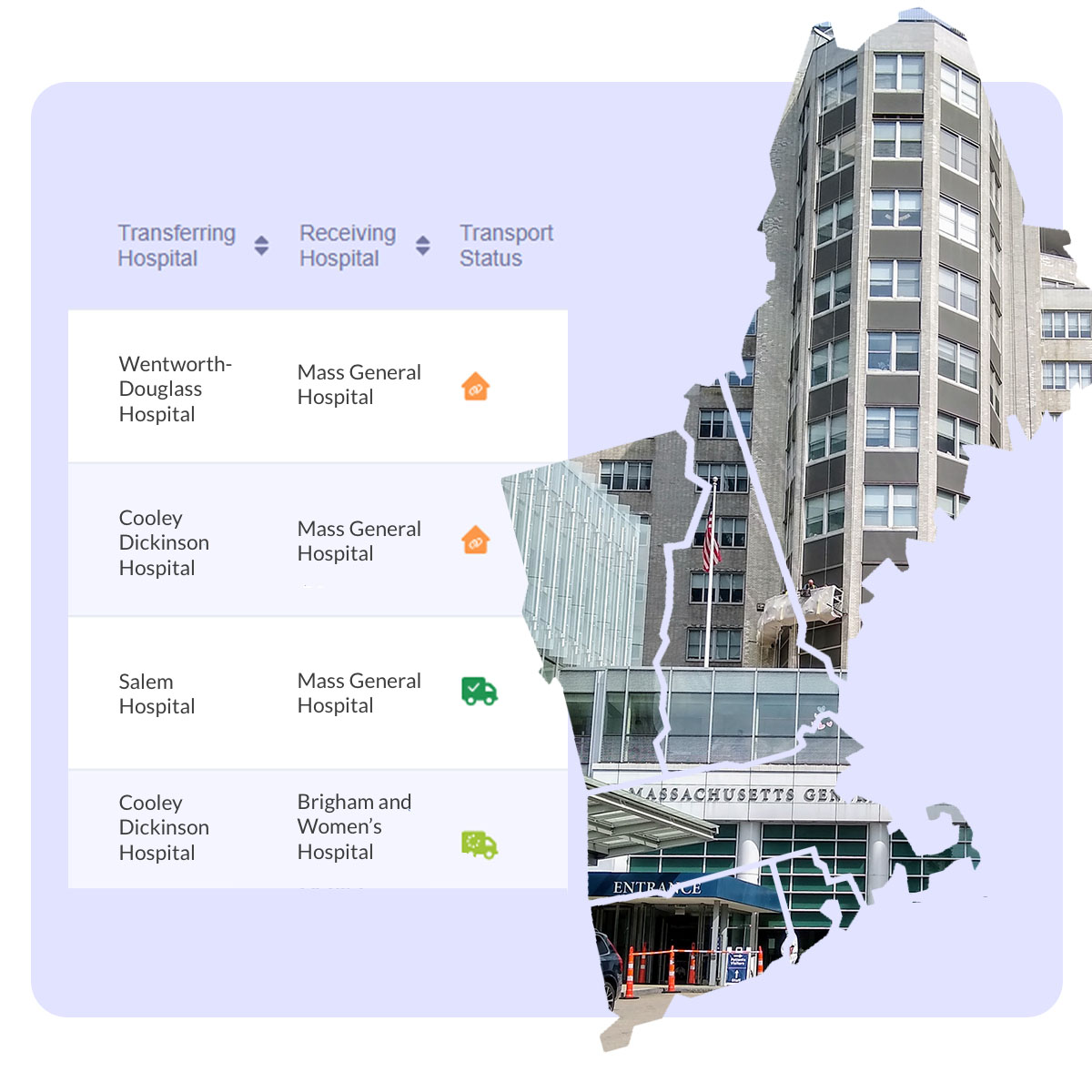
Just as importantly, the platform is built to scale. It supports high patient volumes, complex clinical needs, and coordination across multiple organizations without breaking down under pressure.
As development of the platform continues, enhancements such as deeper EHR integration, expanded reporting, and increased system resilience will further strengthen its role in disaster preparedness.
Ready to turn complex workflows into seamless digital solutions?
Partner with Zco to design and develop secure, enterprise-grade software tailored to your organization’s exact needs.
View More Case Studies