
Why Learning Apps Work Better With Gamification
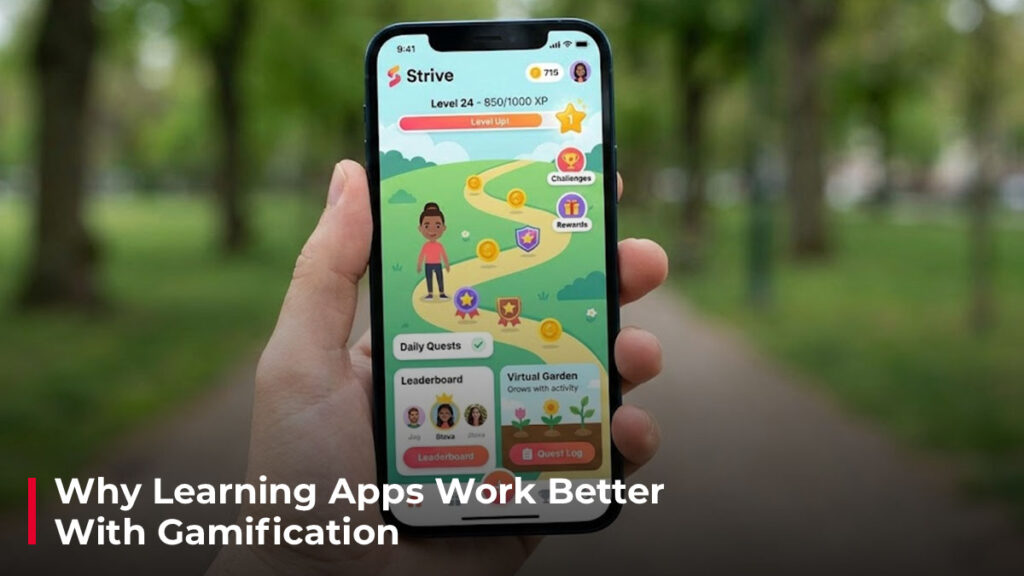
Ever wondered why most of the educational apps like Duolingo or CodeMonkey have leaderboards, rewards, and fun challenges?
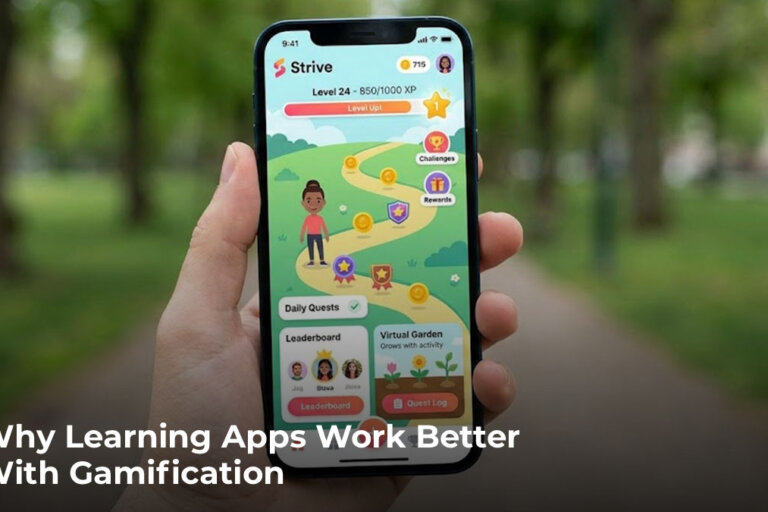
It’s because they aim to pull more users in and help them learn the concept easily by giving them an engaging and interactive, game-like environment to explore. With things like daily goals, badges, rewards, and other gaming elements, gamification can be incorporated into various aspects of learning, making users stick around longer and coming back for more.
These days, there are so many ways to add gamification into learning apps, and it’s really changing how students and professionals engage with content. People aren’t just enjoying these competitive game-like experiences; they’re actually finding them pretty useful.
What is Gamification in Learning?
In simple terms, gamification in learning is a proven and trending method of incorporating game-like elements and thinking into non-game learning activities. The idea here is to motivate and engage users by eliminating distractions and stimulating involvement throughout the learning process.
Imagine staring at a blackboard, wondering why algebra exists, to today’s apps that somehow make the same algebra feel…less painful. Things have come a long way, all thanks to the technology and the gameplay engineers behind them.
Gamified learning is now helping translate content that often felt overwhelming into something fun, familiar, and far more engaging.
From the traditional classroom environment to e-learning platforms, teaching methods have evolved over the years. And with the gamified learning market growing insanely fast with a 32.8% CAGR and headed toward a $216.7 billion market, it’s no surprise that more companies are jumping in and adding gamified learning to their apps.
By turning a tough concept into a quick challenge or giving you a little badge for finally understanding fractions, it can transform the way we perceive education. It makes your brain go, ‘Hey, that wasn’t so bad!’
These competitive-based experiences help ideas stick and even make your brain trick itself into enjoying the process.
What Makes Gamified Mobile Learning Click?
Gamified learning apps are reshaping how people learn by replacing passive content consumption with active, engaging experiences. They work like a friendly push and a fun cheerleader rolled into one.
Instead of traditional methods that often lead to boredom and disengagement, gamified learning in mobile apps uses the following gamification elements to sustain motivation and promote active participation:
- Quests/ Missions
- Badges
- Streaks Rewards, Bonuses & Mystery rewards
- Spin-the-wheel
- Surprise Boxes
- Virtual Currency & points
- Scratch and Win
- Leaderboards & Scoreboards
- Daily/Weekly Goals
- AR-Based Experiences
- Unlockable Content
- Adaptive Challenges
- Feedback
- Social Sharing & Collaboration
Some studies suggest that such challenge-based gamification can improve learner performance by nearly 89% — not bad for something that feels more like play than work.
And with mobile learning becoming such a big part of everyday life, around 55% of learners now use their smartphones to study. It just makes sense: you get to learn on the go, track your progress, and get instant feedback on how you are doing.
Basically, gamified learning apps flip the learning mode from something you ‘sit through’ into something you genuinely want to explore, enjoy, and be proud of.
They tap into what drives us on the inside — curiosity, progress, achievement — while also adding those little external nudges like points, badges, and challenges. Together, they make learning feel less like a burden and more like a quest you actually want to finish.
Imagine learning something you actually enjoy. You’re focused, it starts clicking, and you get through it more smoothly than you expected. Add a bit of applause or a small reward on top of that, and suddenly you’re motivated to push even further.
This simple cycle of interest, focus, curiosity, and motivation is what most modern gamified learning apps are trying to recreate.
Over the past few years, brands have started to look at learning apps a little differently. Instead of treating them as simple content delivery tools, they’ve begun weaving in gaming mechanics to make the experience more interactive.
Additionally, gamification has proved to be a powerful engagement driver, especially within loyalty programs. It not only boosts participation but also strengthens long-term customer relationships, brand loyalty, and improves business outcomes.
The numbers say it all — businesses that use gamification have seen up to a 63% drop in churn while accelerating overall growth.
In other words, gamified learning apps are doing more than just entertaining users. They help brands understand user behavior better, strengthen retention, and shape smarter, data-driven decisions. In many ways, they’ve become less of an add-on and more of a strategic engine powering how businesses connect with their audiences.
Best Practices for Gamifying Your Education App
Know Your Audience:
First things first, you need to know who you’re building for.
Your audience’s age, needs, skill levels, strengths, weaknesses, and even emotional intelligence all shape the kind of gamification that will actually work in your education app.
Because let’s be honest: what motivates a 10-year-old isn’t going to impress a 25-year-old who just wants to get through their to-do list.
Therefore, spend some time talking to them, run quick surveys, observe how they learn, and understand what kind of rewards or encouragement actually motivate them.
Take Khan Academy and Todoist, for example. Both use gamification, but in very different ways because their audiences and goals are worlds apart.
Khan Academy is built for students who want to learn subjects like history, science, math, geography, and more. To keep learners engaged, it uses things like skill trees, badges, progress dashboards, and energy points that make learning feel like unlocking levels in a game.
Todoist, on the other hand, is for students, working professionals, content creators, or just anyone wanting structure in their daily routine. It uses difficulty levels, point-based rewards, and a “karma score” that gives users a sense of achievement every time they complete a task. That little boost keeps people motivated and consistent.
Add the Right Gamification Elements
When it comes to gamification, there’s no shortage of elements you could add — points, badges, streaks, leaderboards, surprise rewards, and more. But the real trick is choosing the right mix of game mechanics that actually match your audience’s interests and keep them motivated.
The elements you add should feel fun, meaningful, and aligned with what your learners actually enjoy, not just thrown in for the sake of it.
At the same time, don’t overload your app with too many game mechanics. It can feel manipulative and add to the distraction. Keep things simple, intuitive, and focused so users stay engaged without feeling overwhelmed.
For example, in apps like Advantage4Kids for students aged 6-12, simple rewards such as “Finish today’s math quiz and unlock a cute avatar sticker you can collect” help keep them curious without feeling forced.
Whereas, for professionals, the gaming elements should provide clarity, efficiency, and practical rewards. Say you complete a course and you get a certification badge as a reward, which you can highlight on your linkedin profile.
It’s motivating because it matters.
And, for learners who struggle to stay engaged, try adding unpredictable challenges, fun surprise bonuses, and difficulty levels that adapt as they improve.
Give Immediate Feedback
One of the biggest goals of gamified learning apps is to keep users motivated even when they mess up. That’s why instant feedback is so important. It helps learners spot mistakes right away and correct them on the spot.
After all, failure isn’t a setback in learning; it’s part of skill development.
Let’s apply this scenario to a language learning app. You’ll find multiple levels you can either ace in one shot or tackle slowly at your own pace. But no matter how you play, the app gives you a limited number of attempts to clear each level. This is where instant embedded feedback becomes crucial.
Visual cues like level bars, progress indicators, task objectives, or “lives remaining” make it easy for learners to see how far they’ve come, how many chances they have left, and what they need to do next. With this real-time feedback, users stay cognitively alert, make smarter choices, and adjust quickly.
Many apps even allow you to earn extra chances by completing side challenges. Meaning, if you complete bonus challenges, you can unlock extra chances or power-ups to help clear a difficult level. So instead of feeling stuck, these instant feedback mechanisms make users feel empowered to try again.
Personalize Each Experience
Every user is different. Everyone learns differently, enjoys different things, and gets motivated in their own way. So, it’s important that your app provides gamification experiences that need to feel tailored and aimed at the real challenge users face.
Personalized learning paths, clear progress bars, and rewards that reflect what they find exciting can completely change how users experience your app.
Think of how most games work: before they even teach you anything, they nudge you to pick a path, try something out, and figure things out as you go, even if you have no clue what’s coming next.
Instead of blindly guessing, learners start thinking, experimenting, and discovering.
Suddenly, the entire journey feels like a small adventure, and the training becomes way more effective and enjoyable. And that’s the ideology of game thinking which is helping every user feel like the journey was personalized just for them.
Implement Monetization
As your educational app continues to evolve, having a reliable monetization strategy becomes essential for ensuring its long-term viability.
A steady revenue stream doesn’t just keep your learning platform running; it fuels innovation. It allows you to invest in new technologies, update content regularly, and make sure learners always have access to high-quality, modern learning experiences.
Premium versions also tend to build stronger credibility. Whether we admit it or not, users often associate paid products with better quality, reliability, and seriousness.
The key is choosing a monetization approach that aligns with your business goals and the type of content you deliver. This could be subscriptions, in-app purchases, paid add-ons, ad-supported models, or even strategic partnerships.
A diversified revenue strategy not only boosts sustainability but also ensures your platform continues growing without compromising the learning experience.
Make Learning Social
Human beings are wired to socialize and build connections. We love sharing wins, celebrating milestones, and feeling seen. Gamified learning apps tap into that instinct to turn learning into something people want to do.
Therefore, enabling your users to share their learning socially should be a key part of your gamification strategy.
It drives healthy competition. Imagine a math app where students can join multiplayer challenges and track their rank on a live leaderboard. Seeing their name move up motivates them to try a few extra problems or revisit tricky lessons.
It can attract even non-users to your user base by organic means. Friends, family, and peers see the progress and want to join in.
For your business, it’s a win-win. Higher engagement, better retention, increased brand visibility, and even a chance to re-engage users who’ve gone inactive.
The Future of Gamification in Learning Apps
App gamification is taking off across almost every industry, and education is one of the areas where its impact is most evident.
Not too long ago, learning apps mostly acted like digital textbooks. Today, things look completely different. This shift is attributed to companies that began experimenting and pushing the boundaries of what learning apps could deliver.
As the momentum continues to build, let’s look at some of the future trends that are poised to make your app gamification strategy much stronger than it is today.
Adaptive Gamification Powered By AI-driven Personalization
Nobody wants a one-size-fits-all learning experience. What works for one learner might completely bore another.
That’s where adaptive gamification, powered by artificial intelligence, makes a real difference. It adds unique value to the learning process, turning each experience into something more personalized, engaging, and truly worthwhile.
By leveraging advanced analytics and key performance metrics, adaptive algorithms can fine-tune your gamification strategy to match each learner’s unique needs and learning curve. It uncovers how individuals learn, their pace, preferences, habits, and even the areas where they struggle, and adapts accordingly.
With this level of personalization, your app begins to feel less like a generic tool and more like a dedicated personal coach.
In essence, with better gamification strategies, advanced AI-driven tools, and smarter app development capabilities, the future of adaptive gamification looks very promising. Every learner gets their own “custom-built” game path without even realizing it. And brands get a smarter way to keep users engaged for the long run.
Immersive Full-On Experiences
If the last decade was all about making learning a little more interactive, the next one is about making it straight-up immersive. With technologies like augmented reality (AR) and virtual reality (VR) becoming more accessible than ever, businesses will be leaning towards creating learning experiences that feel like stepping into another reality.
Educational apps are quickly becoming mainstream tools for immersive remote education, and the shift is only getting stronger.
As gamification fuses with narratives-driven experiences, context-aware interactions, adaptive environments, and simulations, apps can turn into platforms for creative exploration where every interaction feels engaging, immersive, and genuinely fun to absorb.
Of course, with all this tech, brands will also have to think carefully about behavioral insights, ethics, and how to design responsibly. But when done right, immersive gamification has the potential to seriously improve retention, confidence, and skill development in education.
Collaborations & Community Building
Looking ahead, collaborations and community-building will sit right at the heart of gamified learning.
We’re moving toward a future where students expect multiplayer learning experiences, team-based challenges, and virtual spaces where they can learn alongside others who share the same goals.
We are already seeing this shift happen, and this behavior is only going to grow.
As these apps evolve, it will set the stage for some incredible social pathways. Learners will have real-time access to next-gen collaborative tools and virtual project hubs that make learning feel more social, dynamic, and connected.
Not to mention, the next wave of learning platforms is going to beautifully blur the lines between a ‘course’ and a ‘community.’ We see a future where learning groups don’t just disappear when a module is over. Instead, they will evolve into lasting, collaborative environments, a supportive space that learners can always come back to.
Many experts believe gamified education is headed toward a more networked and community-driven model.
Gamify Your Educational App With Zco
Gamification of educational apps is all about redefining how learners use educational tools. They aim at increasing their attention span by creating experiences that motivate, inspire, and engage learners. At the same time, it gives brands a way to connect with their audience on a deeper level and keep them engaged over time.
At Zco, we partner with schools and businesses to turn their unique app ideas into real, practical solutions. As experts in custom software development, we design strategies that align with your learning objectives, your audience’s needs, and your business goals.
Whether it’s integrating personalized challenges, social features, or progress tracking, we ensure that your gamified learning app truly enhances the learning experience.
If you would like to know more, please feel free to reach out.